Sunlight to everyday life.
One connected system.
Three simple ideas behind solar and storage: generate energy, keep some for later, and use it when you need it.
It starts
on your roof.
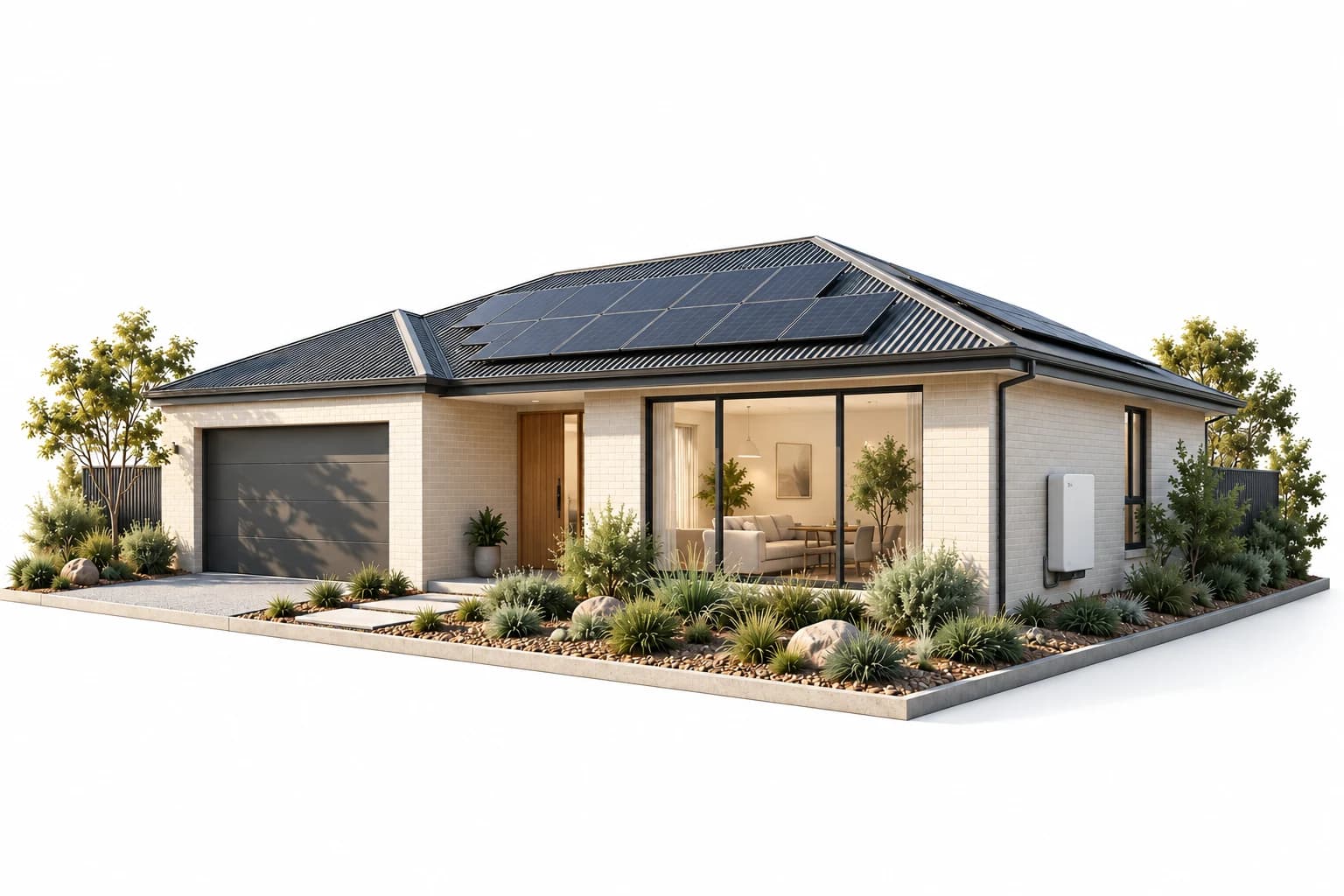
Photovoltaic panels convert sunlight into direct current (DC) electricity. An inverter converts that power into alternating current (AC) for your home or business.
Generation changes with available sunlight, shading and the installation. The grid can supply electricity when on-site generation is not enough.
Keep some sunlight
for later.
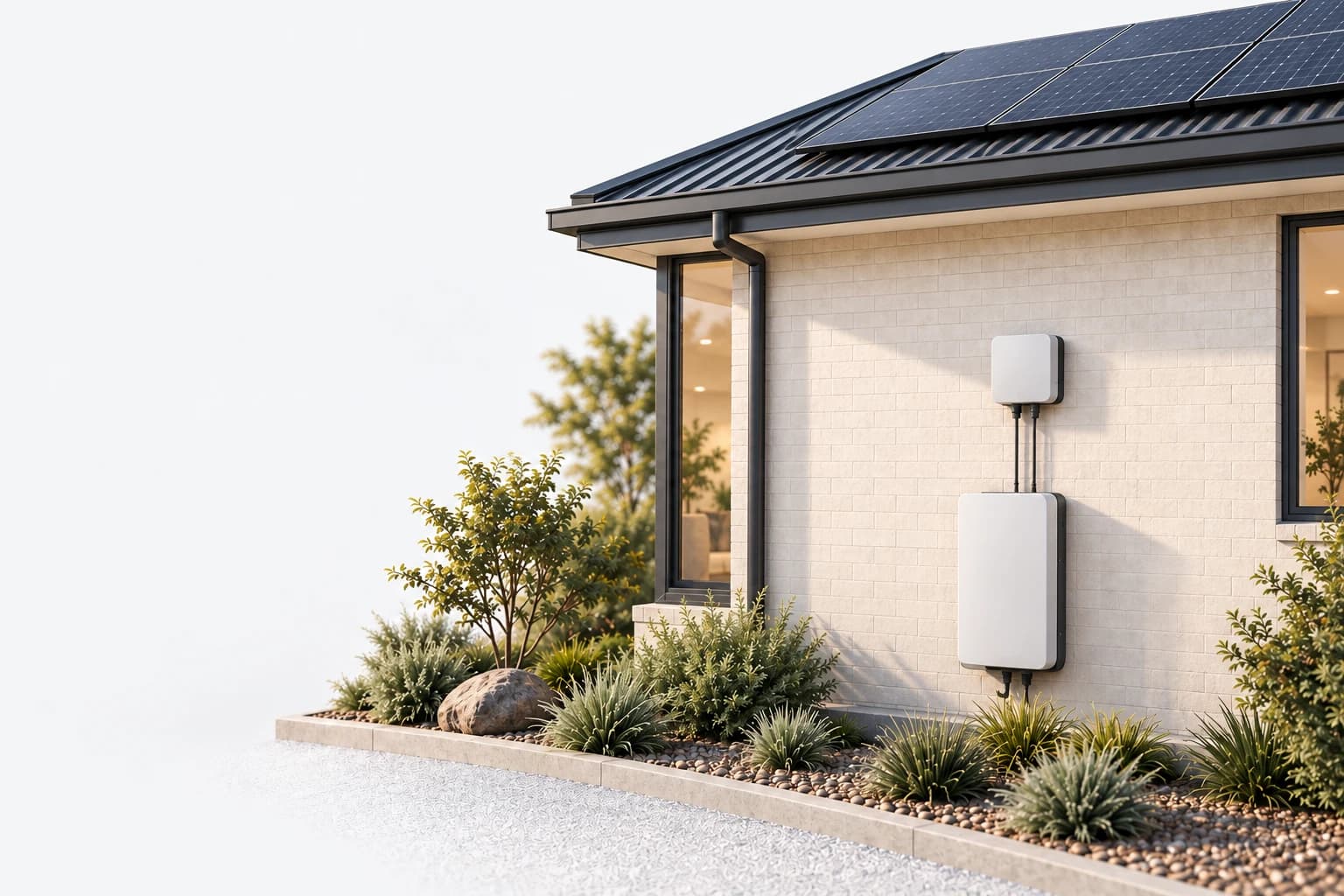
When your system produces more electricity than you are using, a compatible battery can store some of the surplus. Its controls manage charging and discharging.
The way the battery and inverter connect varies by system. Export settings and network limits also affect what happens to surplus generation.
Day ends.
Life carries on.
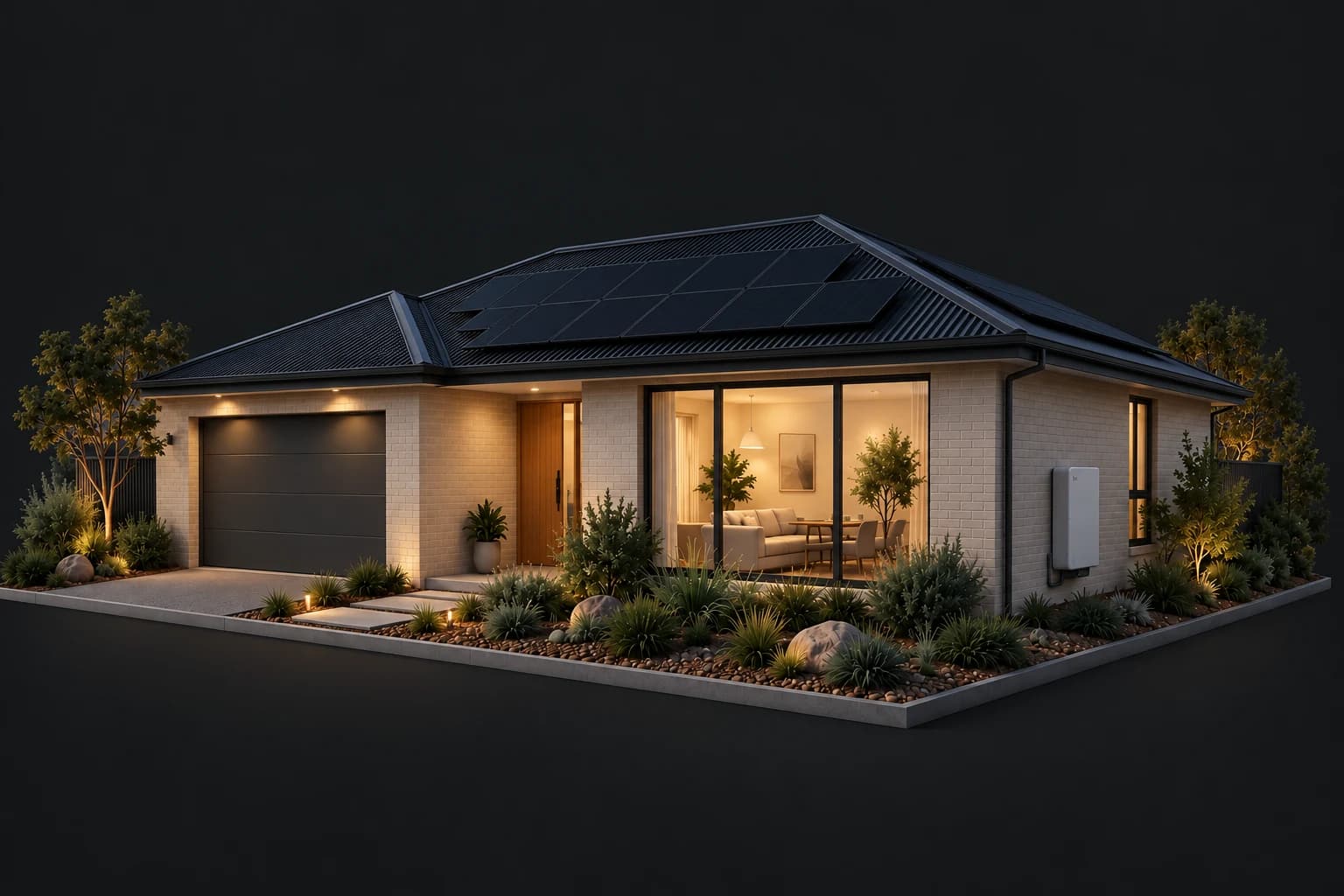
Stored energy can be used later, including after sunset. How long it lasts depends on the charge available and the power you are using.
Backup during an outage is a separate design choice. It needs compatible equipment and an installation configured for the circuits you want to support.
The right balance
is personal.
A useful system starts with when you use energy, what your site can support and what you want to achieve. Solar size and battery capacity are part of that conversation.
Find your starting pointA few things you may be wondering.
What happens to energy I do not use or store?
It may be exported to the grid if your connection agreement allows it. Export limits can restrict the amount. Any payment for exported energy depends on your electricity plan.
Will solar work on a cloudy day?
Panels can still generate in diffuse daylight, but output is generally lower than under strong sunlight. Actual generation depends on cloud cover and site conditions.
Is battery capacity the same as power output?
No. Capacity, usually expressed in kWh, describes how much energy can be stored. Power, expressed in kW, describes how quickly energy can be delivered. Both matter when choosing a system.
Let’s talk energy.
A home, a business, or a bigger idea. Tell us what you have in mind.
Discuss your project